The roots of TrackVisyon research
Hands-on experience with motion-tracking systems created a strong foundation of technical data and movement knowledge that now powers a fully software-based product.
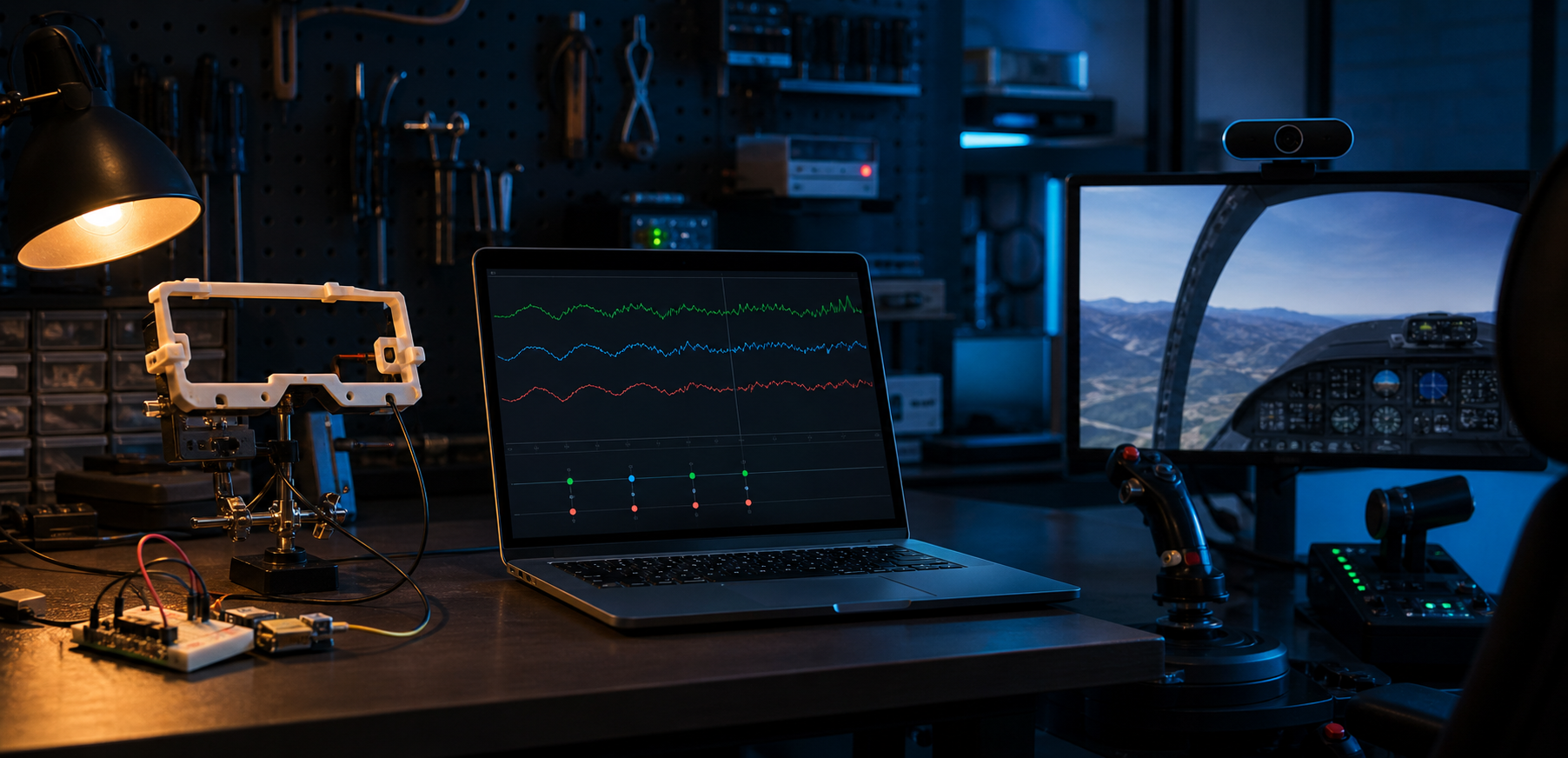
TrackVisyon grew from in-depth movement research with one clear goal: bring advanced, natural and affordable head tracking to compatible games using everyday devices.
Hands-on experience with motion-tracking systems created a strong foundation of technical data and movement knowledge that now powers a fully software-based product.
Analysis of trajectories, response time, noise, stability and return to centre shaped an algorithm that better recognises intentional movement and turns it into natural control.
AI and computer vision let TrackVisyon use a webcam or smartphone, removing the need for wearable sensors and making head tracking accessible to many more players.
A smartphone can be configured as a video source through compatible solutions. It is an alternative to a webcam, not an additional requirement.
Motion Analyzer 2.0 makes smoothness, latency, responsiveness, stability and micro-movements readable. Every measurement deepens our understanding of real behaviour and helps evolve the heart of the algorithm.
All that research comes together in lightweight Windows software with AI, guided setup, intelligent calibration and 6DOF control for compatible games: all you need is a webcam or smartphone to get started.
Technical data, continuous research and community feedback guide technology that keeps becoming smoother, more precise and closer to natural movement.
TrackVisyon evolves through structured technical data collection, movement analysis and community feedback. A growing body of knowledge that makes the algorithm increasingly natural, stable and responsive.
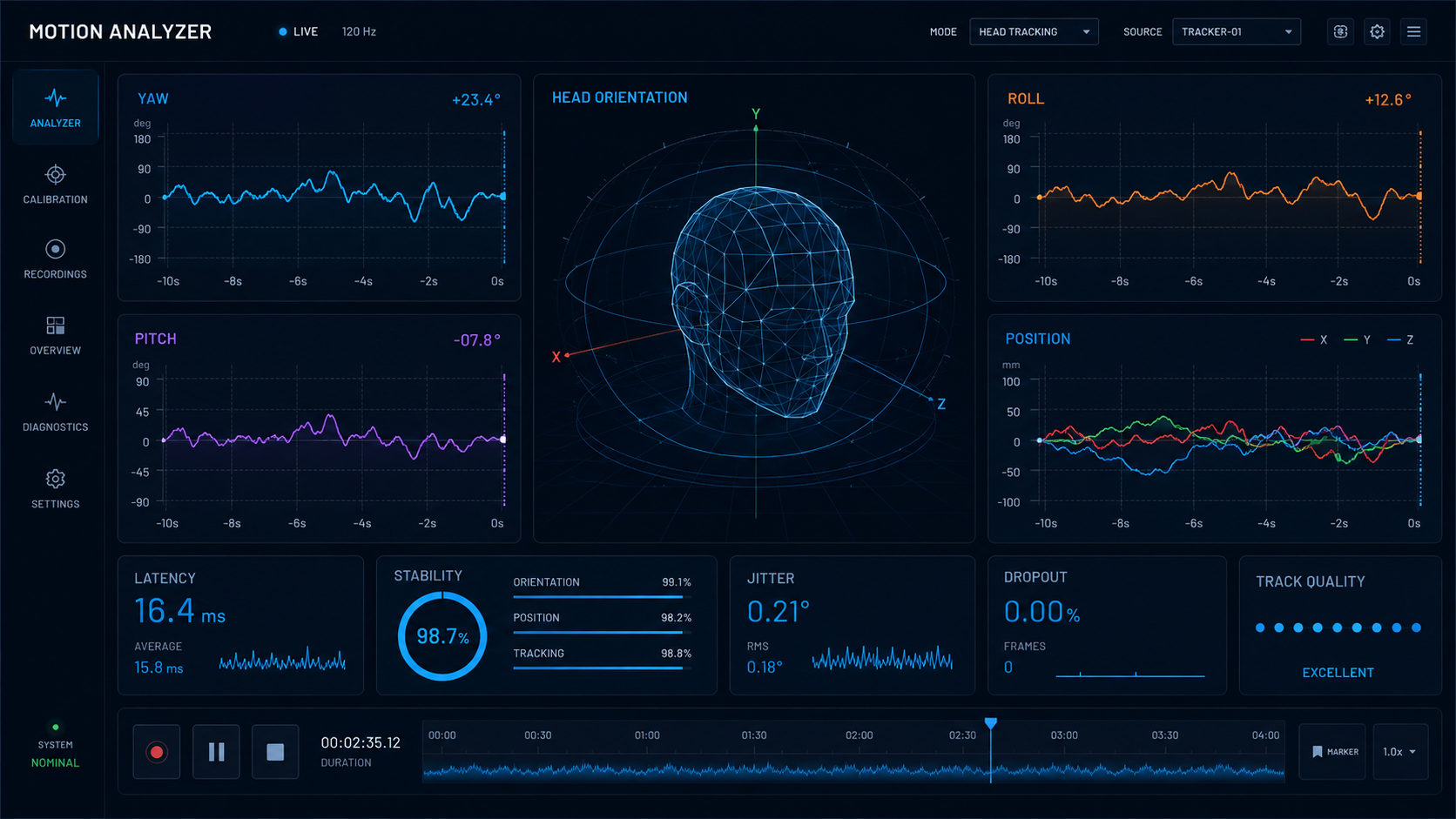
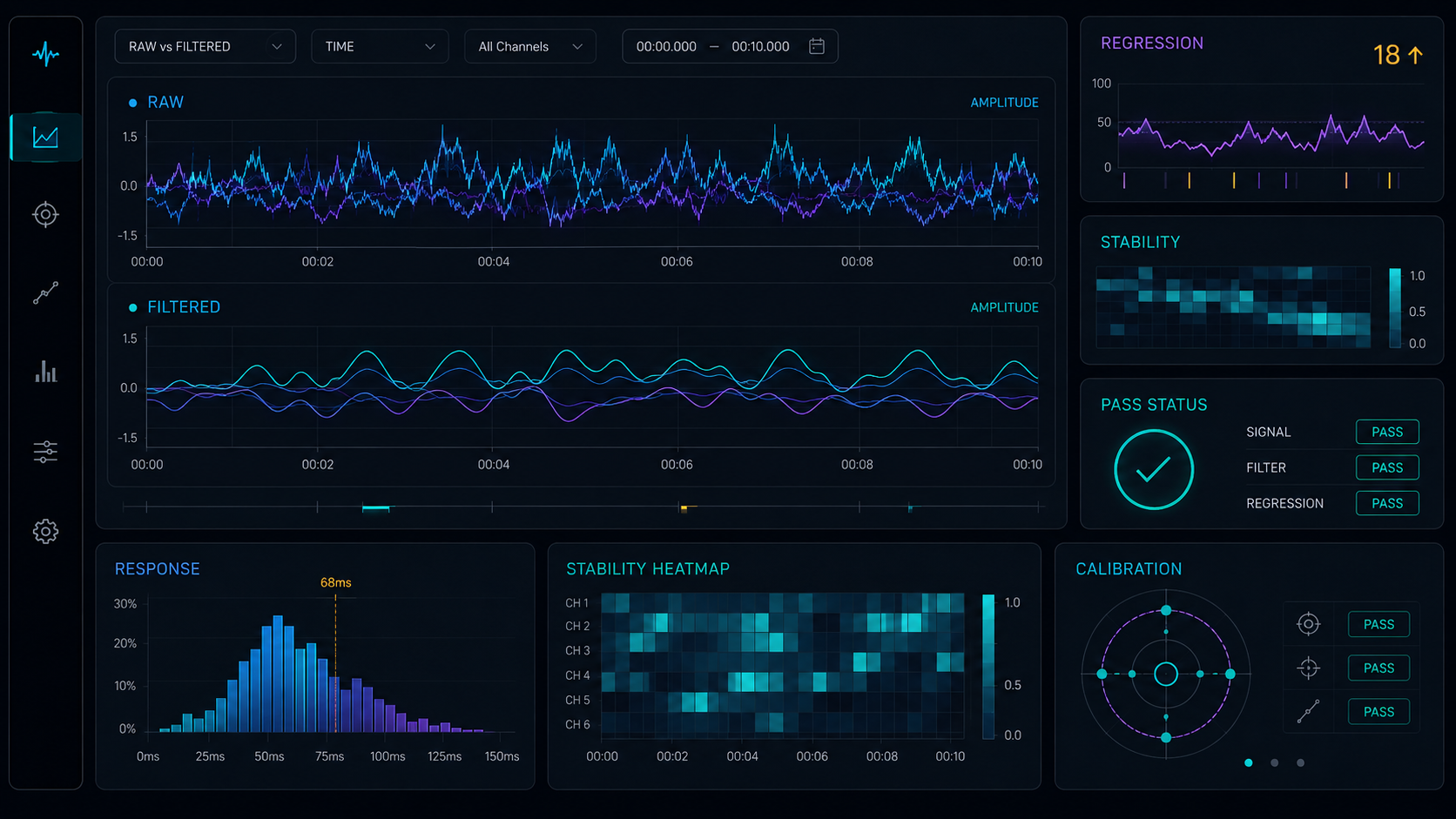
Every report helps us understand new setups and movement styles, turning players' real-world experience into opportunities for improvement.
TrackVisyon does not collect or send user webcam video, frames, images or biometric data to its servers. Algorithm research uses controlled sessions and technical measurements of latency, jitter, noise, drift and micro-movements; while the software is in use, camera processing stays local on the PC.
Charts and comparisons reveal smoothness, responsiveness, stability and movement transitions, turning complex signals into clear insight for algorithm evolution.
Comparing different sources and scenarios enriches the data foundation and helps identify intentional movement more precisely in real-world conditions.
Latency, stability, centre behaviour, calibration and small-movement response are considered together to maintain a fluid, consistent experience.
Research, technical data and community insight drive updates designed to make TrackVisyon increasingly precise, lightweight and natural.